
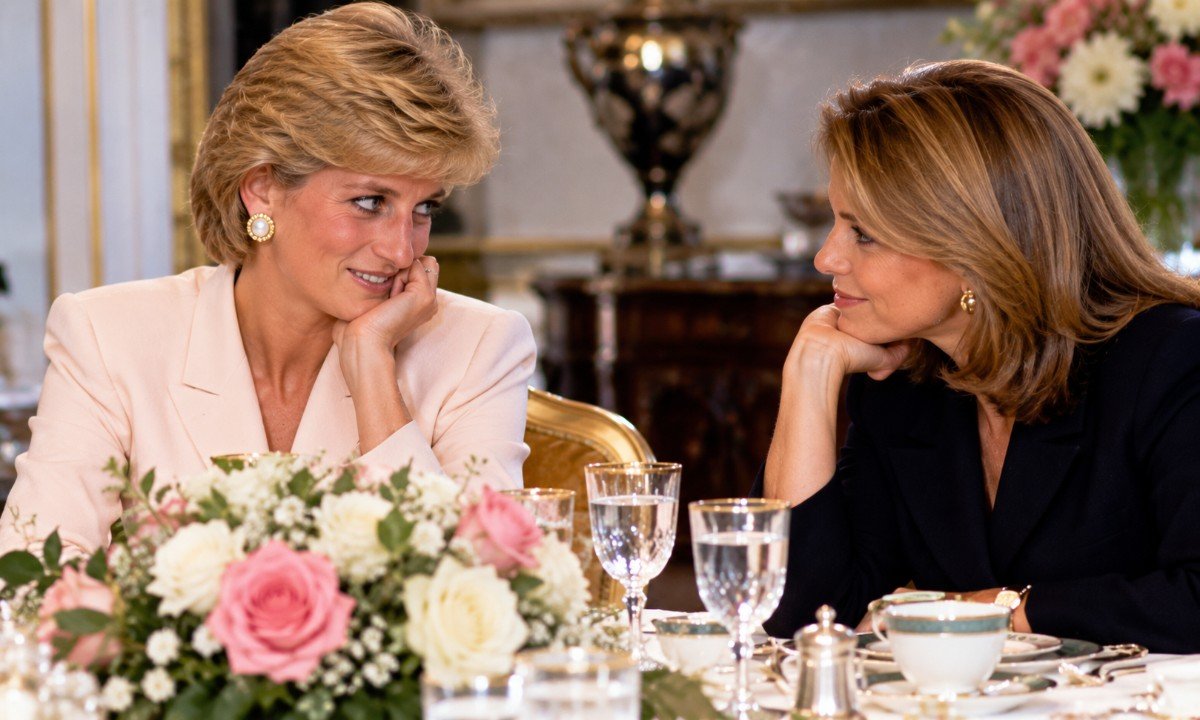
Some of the most revealing moments in a famous life happen away from the cameras. For veteran broadcaster Katie Couric, one such moment came at a lunch table in the summer of 1996, when Princess Diana said something she has never forgotten.
An Unexpected Seat Beside Royalty
By the mid-1990s, Couric had spent years covering the British royal family for NBC’s Today. She had not met Diana in person until June 1996, when she was invited to speak at a luncheon in Chicago honoring the Princess of Wales. The two were seated just two places apart.
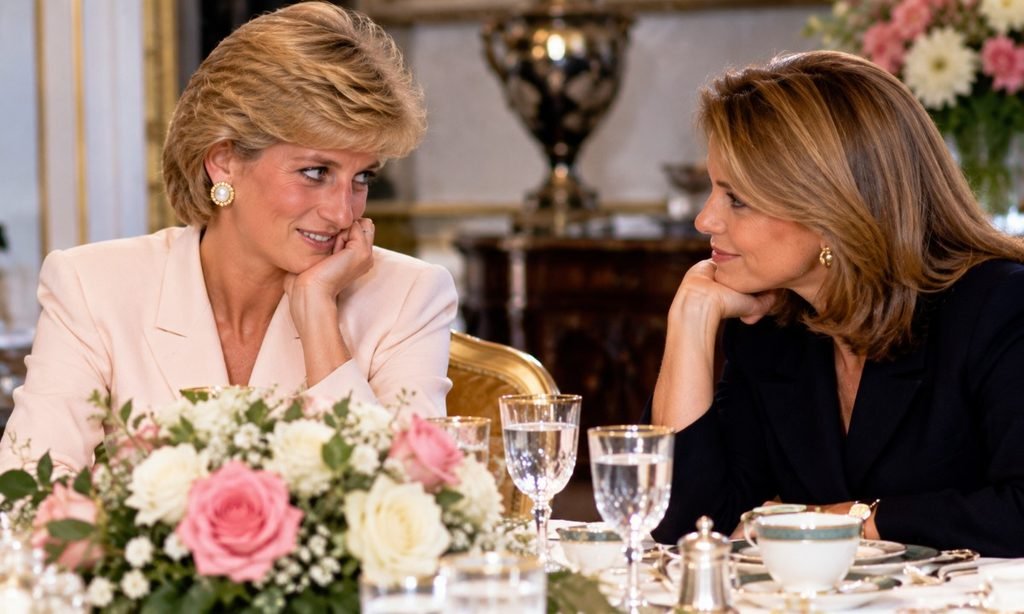
Couric has said she was nervous. Diana put her at ease almost immediately. According to Couric, the princess complimented her pink lipstick. It was a small, human gesture that broke the ice.
Beauty, Charm, and Something Else
In her memoir Going There, Couric described being struck by Diana’s beauty and what she called her girlish charm. Underneath that charm, though, Couric said she sensed a deep sadness.
The conversation moved beyond pleasantries when Couric asked a question anyone might ask a traveler. She wondered whether Diana was eager to head home after an exhausting trip across the United States.
Diana’s reply was disarmingly honest. She said she would be, but she was going home to an empty house.
The Context Behind the Words
The remark carried more weight because of what Diana was living through. Her marriage to Prince Charles was ending, and the divorce was being finalized. The couple would formally file about two months after the luncheon. Couric later reflected that she was surprised by how open the princess was with someone she had only just met.
Couric recalled that Diana seemed a little melancholy and lonely during that stretch of her life. For a woman who had spent years in the public eye, the comment hinted at the private reality behind the glamour: a home that felt hollow while she worked through a very public family separation. today
Two Mothers, One Tip
The exchange wasn’t all heavy. Couric says the two also talked about motherhood, and Diana asked for parenting advice about her sons, William and Harry. The princess reportedly said she was having a hard time with the boys.
Couric’s suggestion was practical and a little cheeky: hide the TV remote. She recalled that Diana tilted her head at the idea, looking puzzled, as if she had never considered it. It is a charming picture of one of the most photographed women in the world being, for a moment, an ordinary parent looking for a trick that might work.
A Loss That Hit Close to Home
Barely a year later, the world lost Diana. She died in a car accident in Paris in 1997 at the age of 36. Couric was among the journalists who traveled to London to cover the funeral.
The assignment landed at an especially painful time in her own life. Her husband, Jay Monahan, died of colorectal cancer at 42, less than a year after Diana’s death. Couric has said that thinking of her daughters during the funeral coverage overwhelmed her, and she told colleague Tom Brokaw she was struggling. Her brief lunchtime encounter with Diana had become something much heavier.
Why Diana Still Resonates
Couric has also tried to explain why Diana connected so deeply with ordinary people. She said Diana wore her insecurity and vulnerability openly, and that despite being a princess, she somehow seemed like the rest of us.
That may be the heart of why such a short conversation has stayed with Couric for decades. Diana didn’t deliver a polished soundbite or guard her words the way public figures usually do. She said something simple and true to a stranger at a lunch table, and in doing so showed the loneliness behind the royal image.
The Takeaway
Nearly three decades on, the story endures because it shows a different side of a global icon. There was no scandal and no scoop, only a candid moment between two women: one a journalist who had watched Diana from afar, the other a princess quietly admitting she dreaded going home.
For Couric, it became a lasting memory, a small piece of evidence that behind the tiaras and headlines was a person who was, at that moment, simply lonely. It’s also a reminder that the people we think we know best through screens and magazines are often carrying burdens we never see.



1 comment