
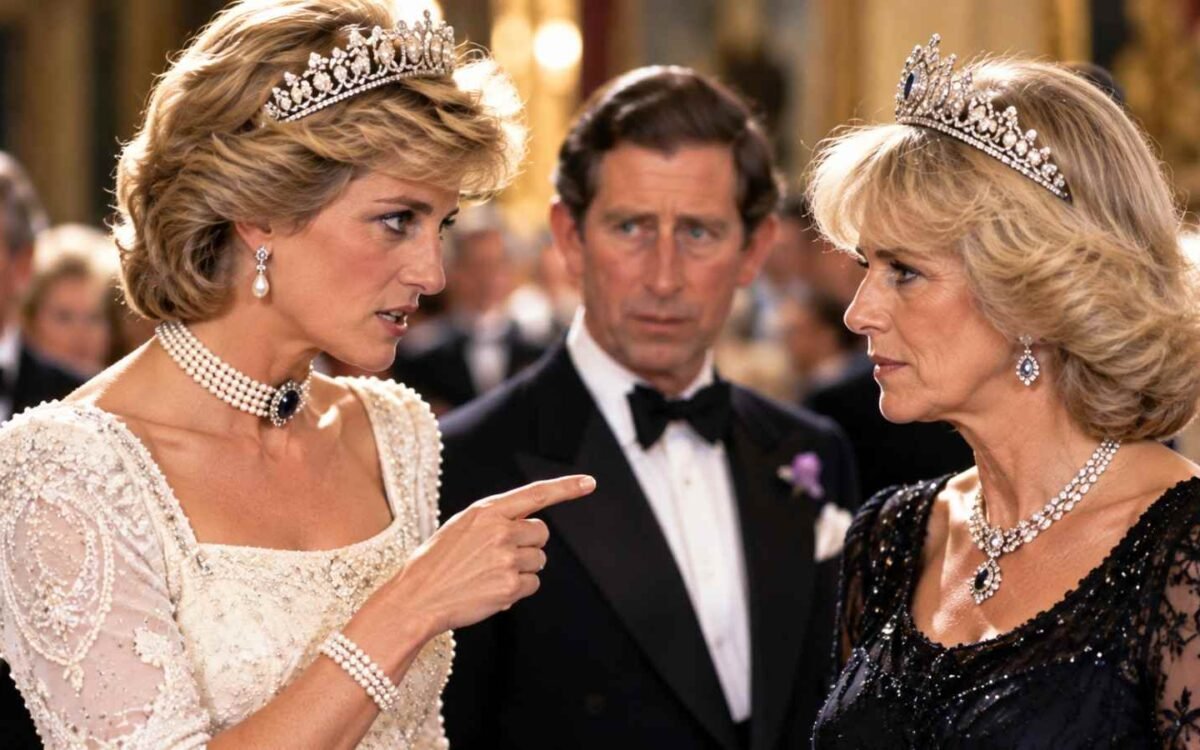
The Princess of Wales reportedly faced Camilla Parker Bowles in a tense private conversation in 1989, revealing the emotional struggle behind one of the most scrutinised royal marriages in modern history.
Long before the world watched Princess Diana discuss the difficulties of her marriage on television, she was privately confronting the painful reality of her relationship with Prince Charles. One of the most revealing moments reportedly took place in 1989, when Diana attended a birthday party and came face-to-face with Camilla Parker Bowles, the woman she believed was involved with her husband.
The encounter has since become one of the most discussed episodes in the history of Charles and Diana’s marriage. Recounted by Diana herself in recorded conversations later used by biographer Andrew Morton, the confrontation offered a rare glimpse into her feelings at a time when the public image of the royal couple remained far removed from the private tensions surrounding them.
More than a dramatic royal anecdote, the incident revealed Diana’s determination to address a situation that she felt was deeply affecting her marriage and personal happiness.
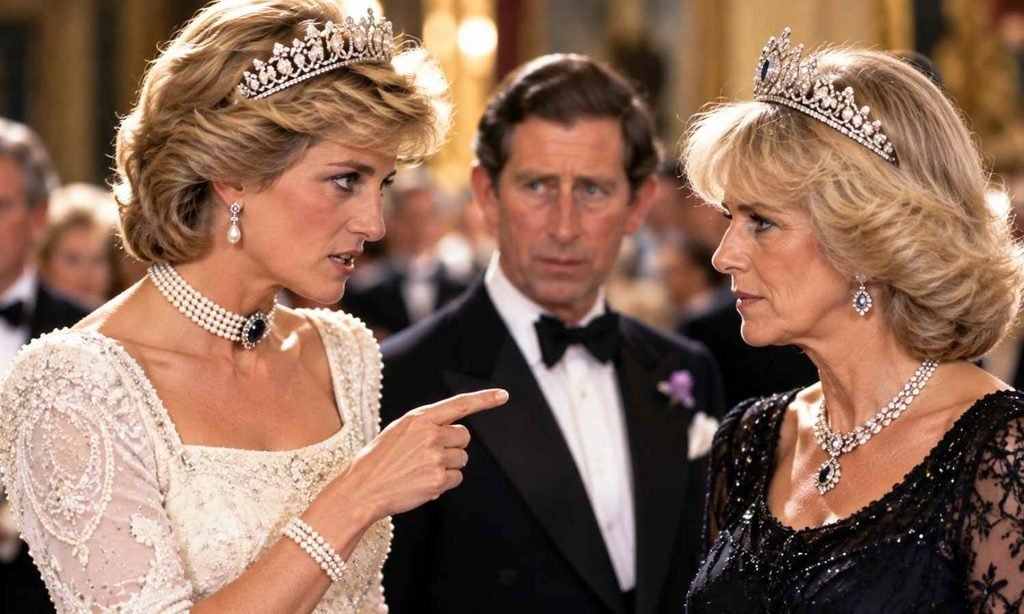
The 1989 Birthday Party That Became a Turning Point
According to Diana’s account, the confrontation occurred at a birthday party in 1989 for Camilla’s sister, Annabel Elliot. Diana arrived unexpectedly and later discovered Prince Charles speaking with Camilla and another guest.
The setting was a private social gathering, but the moment carried considerable personal significance for Diana. She had long been troubled by Charles’s continuing relationship with Camilla, and the party presented an opportunity to address her concerns directly.
In her recorded recollection, Diana described asking the two men to leave so that she could speak privately with Camilla. The conversation that followed was uncomfortable, but Diana said she wanted Camilla to understand that she was aware of the relationship she believed was taking place.
Diana later recalled that she was frightened before the exchange. Nevertheless, she chose to raise the subject rather than allow the uncertainty to remain unspoken.
Her account became widely known after excerpts from the recordings were broadcast in 2004. Contemporary reporting by CBS News and The Standard described the confrontation as one of the most revealing moments in Diana’s account of her troubled marriage.
Diana’s Message to Camilla: “I Want My Husband”
The most memorable part of Diana’s recollection concerned the exchange about what each woman wanted.
According to Diana, Camilla questioned why the princess was unhappy when she already had so much: public admiration, a royal position and two children. Diana’s reported response was simple and deeply personal: she wanted her husband.
That reply has endured because it captured the emotional heart of the conflict. Behind the titles, formal appearances and public expectations, Diana was describing a marriage in which she felt insecure and unable to rely on the emotional commitment she expected from her partner.
The exchange also illustrates why the incident continues to attract attention. Rather than focusing on royal status or public image, Diana’s account centred on something ordinary and recognisable: the desire for trust, honesty and commitment within a marriage.
The conversation should nevertheless be understood in context. The detailed account comes primarily from Diana’s own recollection, and it does not provide a complete, independently verified record of everything said by both women during the meeting.
Read More –
A Marriage Under Increasing Pressure
By the late 1980s, the relationship between Charles and Diana was experiencing serious difficulties. Their marriage had begun in 1981 amid extraordinary public attention, but the pressures of royal life and disagreements within the relationship increasingly overshadowed the image of a fairytale romance.
Diana’s later recorded conversations revealed how distressed she felt about Charles’s relationship with Camilla and about her place within the royal household.
The recordings were used in Andrew Morton’s 1992 biography, Diana: Her True Story. At the time, the extent of Diana’s direct involvement in the book was not publicly understood. She had answered Morton’s questions through recordings made with the assistance of her friend James Colthurst.
After Diana’s death in 1997, Morton published material that confirmed her behind-the-scenes contribution to the biography. The revelations changed public understanding of the book and gave readers a more direct account of Diana’s personal struggles.
As British Vogue’s account of the biography explains, the project gave Diana a way to describe experiences that had largely remained hidden from the public.
The 1989 confrontation was part of this broader story: a woman attempting to make sense of her marriage while living under the intense scrutiny that accompanied her position.
Why the Confrontation Became Such a Significant Royal Story
The encounter attracted lasting interest because it brought together three people whose private relationships would eventually reshape the modern British monarchy.
Diana was the Princess of Wales and the mother of Prince William and Prince Harry. Charles was heir to the throne. Camilla, meanwhile, was a long-standing presence in Charles’s life whose relationship with him remained a source of controversy during his marriage.
For Diana, the reported conversation represented an attempt to confront a personal problem directly. For the public, the episode later became another piece of evidence that the royal marriage was experiencing difficulties well before the couple’s separation became official.
Read More- Kate Middleton’s Most Unforgettable Tiara Moments: The Royal Jewels Behind Her Iconic Looks
The incident also demonstrated the contrast between Diana’s public role and her private experience. She was one of the most recognisable women in the world, yet her account described feelings of fear, vulnerability and emotional uncertainty.
It is important not to reduce the entire breakdown of the marriage to one conversation. The relationship involved years of personal difficulties, competing expectations and intense public pressure. The birthday-party confrontation became famous because Diana later described it in her own words, not because one meeting alone explains everything that followed.
From Private Pain to Public Revelation
In 1992, the publication of Diana: Her True Story brought the princess’s account of her marriage into public discussion. Later, in 1995, Diana gave her landmark BBC Panorama interview, in which she spoke openly about the difficulties within the relationship.
Her description of a marriage in which there were “three people” became one of the most frequently repeated lines associated with the royal crisis. By that point, speculation about Charles and Camilla had become an international subject of debate.
Charles subsequently acknowledged adultery in a 1994 television interview with Jonathan Dimbleby, saying that the marriage had broken down irretrievably. Charles and Diana separated in 1992 and divorced in 1996.
The events of those years transformed public perceptions of the monarchy. They also made Diana’s earlier recollections, including the 1989 confrontation, important parts of the historical record surrounding the marriage.
Camilla’s Later Role in the Royal Family
The story did not end with the breakdown of Charles and Diana’s marriage. Charles eventually married Camilla in 2005, and she became Queen Consort when Charles acceded to the throne in 2022. She is now known as Queen Camilla.
Her position today is markedly different from the role she occupied during the 1980s and 1990s. Yet the history of her relationship with Charles continues to attract public interest, particularly when accounts of Diana’s experiences are revisited.
For many readers, the contrast between the women’s later lives is striking. Diana remains a deeply influential figure in the public imagination, remembered for her charitable work, her connection with her sons and her willingness to discuss personal difficulties. Camilla’s journey to the position of queen has taken place against the background of that history.
The two women should not be treated simply as characters in a rivalry. Their experiences unfolded within a complicated personal and institutional situation, much of which was shaped by the expectations placed on members of the Royal Family.
Why Princess Diana’s Story Still Resonates Today
Decades after the confrontation, Diana’s recollection continues to interest royal historians and readers because it offers a personal perspective on a story often told through headlines, biographies and television dramatisations.
Her reported statement that she wanted her husband remains powerful because it strips away the grandeur associated with royal life. It points instead to the emotional expectations that exist in any marriage: loyalty, security, honesty and the feeling of being valued.
The episode also highlights the importance of distinguishing between historical evidence and later interpretation. Diana’s recorded account provides a valuable first-person perspective, but it should not automatically be treated as a complete account of Camilla’s thoughts or every detail of the encounter.
What can be said with confidence is that Diana described the confrontation as a frightening but significant moment in her attempt to address the difficulties in her marriage. The recordings later helped the public understand how deeply the relationship had affected her.
The 1989 encounter remains one of the most revealing chapters in the story of Princess Diana, Prince Charles and Camilla. It was a private conversation that eventually became part of a much larger public reckoning—one that changed the way the world viewed the royal marriage and continues to shape interest in the British Royal Family today.
1 comment