
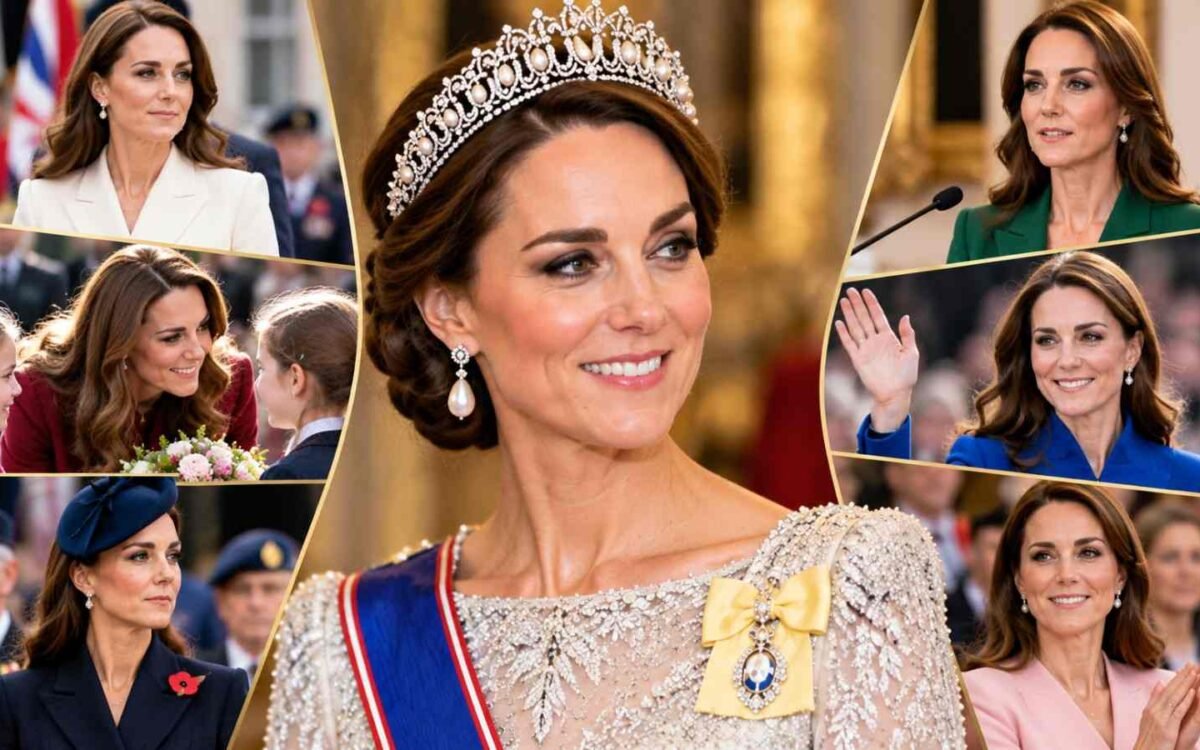
Catherine, Princess of Wales, is becoming an increasingly important figure in the British Royal Family. From her charitable work to her growing confidence at official engagements, these are seven reasons royal watchers believe she is developing the qualities needed for her future role as queen.
For years, Catherine, Princess of Wales, has been one of the most recognisable members of the British Royal Family. But beyond her elegant fashion choices and appearances at major royal occasions, her work has gradually developed into something much more substantial.
As the wife of Prince William, heir to the British throne, Catherine is expected to take on significant responsibilities if William becomes king. Although no one can predict when that transition will happen, her work today offers clues about the kind of royal figure she may become.
From championing early childhood development to representing the monarchy at formal events, Catherine has built a public role that combines tradition with a modern approach to royal service.
Here are seven signs that Kate Middleton is growing into the responsibilities associated with being a future queen consort.
1. Her Commitment to Early Childhood Development Goes Beyond Royal Appearances
One of the clearest indications of Catherine’s long-term vision is her sustained interest in early childhood development.
Through the Royal Foundation Centre for Early Childhood, she has helped bring attention to the importance of the first five years of life and how early experiences can influence emotional wellbeing, relationships and development later in life.
Rather than concentrating solely on individual charity visits, Catherine has supported a broader conversation involving researchers, educators, businesses and communities.
This approach suggests a desire to create lasting change rather than simply raise awareness for a single day. It also gives her royal work a clear identity, built around a subject she has pursued for years.
For a future queen consort, developing a meaningful portfolio of causes can be an important part of establishing public trust. Catherine’s focus on childhood development provides a long-term platform that could continue to influence her work for decades.
2. She Appears Increasingly Comfortable Representing the Monarchy
Royal duties require more than attending ceremonies. Senior members of the Royal Family must meet members of the public, listen to community concerns, welcome dignitaries and represent the institution in different settings.
Catherine has gained experience in all these areas since joining the Royal Family in 2011. Her engagements have taken her to schools, hospitals, community organisations and international events.
Her public role also includes major occasions such as state visits, diplomatic receptions and the annual celebrations that form part of the royal calendar.
These responsibilities require a balance of warmth, discretion and formality. Catherine’s growing experience gives her a foundation for the more prominent duties that would accompany William’s future reign.
Her progress should not be interpreted as proof that a specific change is imminent. Rather, it reflects the gradual development expected of someone married to the heir to the throne.
3. Her Approach to Public Engagements Emphasises Listening and Connection
Catherine’s public work often centres on conversations with individuals and organisations rather than formal speeches alone.
During visits, she regularly meets people working in education, healthcare, community support and charitable services. These interactions give her opportunities to hear personal experiences and draw attention to the work being done outside the royal household.
A future queen consort is likely to have a highly visible public platform, but the effectiveness of that role depends partly on whether people feel heard and represented.
Catherine’s interest in early childhood development also reflects this emphasis on relationships. Her work has repeatedly highlighted how family environments, emotional support and human connection can affect people’s lives.
Royal commentators have increasingly discussed the importance of this personal approach as Catherine and William become more central to the monarchy’s future. However, judgments about her character or leadership style remain interpretations rather than official assessments of her readiness.
4. She Has Experience of Major Diplomatic and Ceremonial Occasions
The British monarchy continues to play a ceremonial and diplomatic role, particularly during state visits and occasions involving foreign leaders.
Catherine has participated in events welcoming heads of state, attending formal receptions and supporting the King and Prince William during important royal engagements.
Such occasions demand careful attention to protocol, cultural sensitivities and the traditions of the host country. They also require members of the Royal Family to maintain a public presence while respecting the diplomatic purpose of each event.
Catherine’s experience at these gatherings has given her familiarity with the formal side of royal life. Her role is not to determine government policy, but to support the monarchy’s constitutional and representative functions.
If William eventually becomes king, Catherine would be expected to undertake an even more prominent ceremonial role. Her experience at state occasions is therefore an important part of her preparation for the future.
5. She Balances Royal Responsibilities With Family Life
Catherine and William are parents to Prince George, Princess Charlotte and Prince Louis. Their family life has remained a prominent part of public interest, particularly as the children grow older and their education becomes an increasingly important consideration.
Balancing family responsibilities with royal engagements can be challenging. Members of the Royal Family often have demanding schedules, public expectations and commitments that require travel or time away from home.
Catherine has spoken publicly about parenting and the importance of children’s emotional wellbeing. Her wider work on early childhood development also connects with the issues families face when raising children.
Her approach offers a reminder that the future queen consort is also a parent navigating the practical demands of family life.
There is no official checklist that determines whether someone is ready to become queen. Nevertheless, managing family responsibilities alongside public service will remain an important part of Catherine’s role as she and William prepare for the future.
6. She Has Developed a Distinctive Public Identity
Catherine’s style attracts considerable attention, but her influence is not limited to fashion.
Over the years, she has developed a recognisable public identity through her work on early childhood development, mental wellbeing and community engagement. These interests help distinguish her role from that of other senior royals.
Her clothing choices can also carry a diplomatic or ceremonial dimension. At formal occasions, she often wears British designers and draws on historic royal jewellery, connecting contemporary fashion with the monarchy’s traditions.
Yet the lasting significance of her public role will depend on more than what she wears. The causes she supports, the organisations she works with and the consistency of her engagement will be central to how her contribution is understood.
A future queen consort can help shape the public image of the monarchy while remaining within the boundaries of the institution. Catherine’s developing portfolio gives her a foundation for that responsibility.
Read More- Princess Diana’s Brave Confrontation With Camilla: The Night She Finally Spoke About Her Marriage
7. Her Future Role Alongside Prince William Is Becoming More Important
Perhaps the most significant factor is Catherine’s position alongside Prince William.
As the Prince of Wales, William is heir to the throne. Catherine’s role includes supporting his public duties while maintaining her own charitable interests and official engagements.
The Royal Family’s official biography describes her work in support of the monarch, including royal duties at home and overseas. This means her responsibilities are already connected to the institution she may one day help represent as queen consort.
The monarchy has also experienced changes in its working structure, making the roles of senior members particularly important. Catherine and William are likely to remain central to its public activities as their responsibilities evolve.
However, it is important to understand what the future title would mean. A queen consort is the spouse of a reigning monarch, not a reigning monarch in her own right. The role is principally supportive and ceremonial, without the sovereign’s constitutional powers.
Catherine’s future position would therefore be shaped by her partnership with William, the duties assigned to her and the traditions of the British monarchy.
What Kind of Queen Consort Could Kate Middleton Become?
Catherine’s years of royal service have given her experience in charity work, public engagement, family life and diplomacy. Her early childhood initiative also shows how a royal interest can develop into a sustained programme rather than remain limited to occasional appearances.
These are meaningful foundations for a future queen consort, but it is too early to define exactly what her reign alongside William would look like. Each monarch and consort faces a different set of public expectations, and the institution itself continues to evolve.
Catherine may expand her existing causes, take on additional responsibilities or develop new initiatives as circumstances change. Her priorities will also need to reflect the needs of the Royal Family, her family life and the wider public.
For now, the most useful way to understand her preparation is through the work she is already doing—not speculation about dates or a possible accession.
Final Thoughts
Kate Middleton’s journey from a university student to the Princess of Wales has involved more than a change in title. Since marrying Prince William in 2011, she has built experience in charitable work, diplomatic events and public service while raising their three children.
Her focus on early childhood development, increasing experience at official engagements and partnership with William all provide reasons why royal watchers see her as an important part of the monarchy’s future.
Whether she eventually becomes queen consort in the years ahead will depend on the future course of the monarchy. What is clear is that Catherine already holds a significant position within the Royal Family—and the responsibilities she carries today are helping shape the role she may one day undertake.
1 comment