
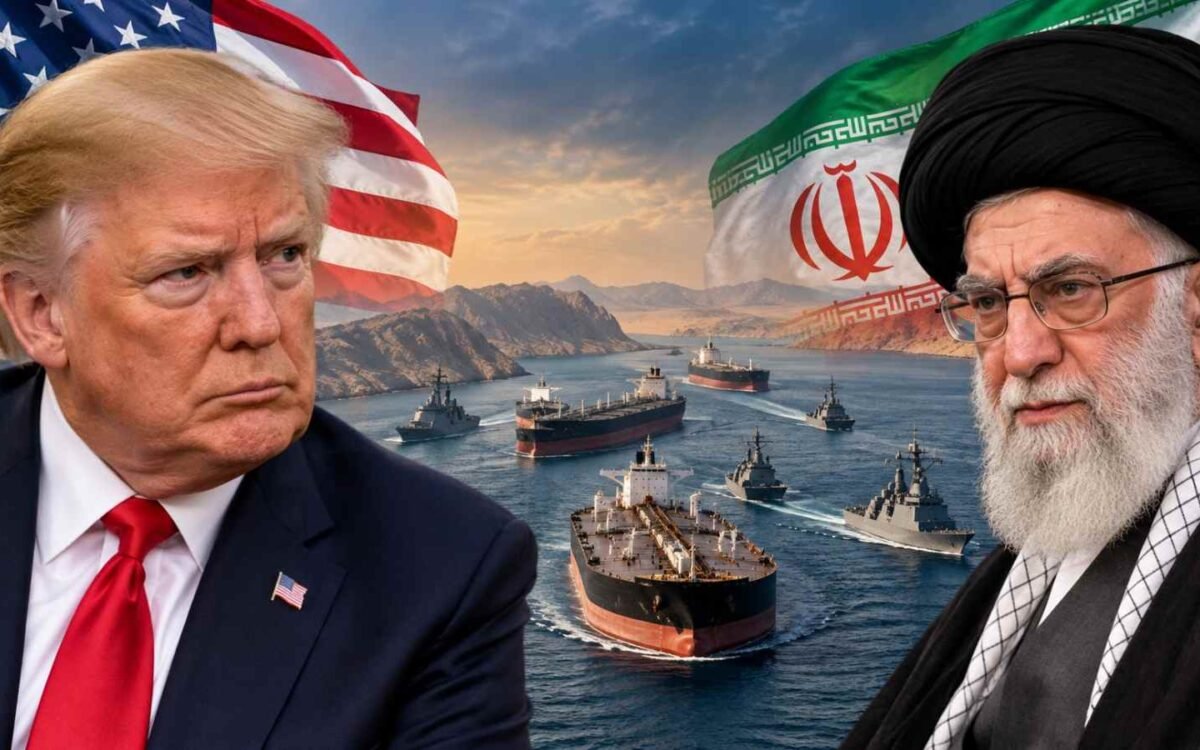
WASHINGTON — The confrontation between President Donald Trump and Iran is entering a potentially dangerous phase as tensions around the Strait of Hormuz intensify, raising fresh concerns about global energy supplies, commercial shipping and the possibility of a wider military escalation.
The strategic waterway has become one of the central pressure points in the conflict between Washington and Tehran.
Iran continues to assert control over the Strait of Hormuz, while the United States has demanded that the vital shipping route remain open to international traffic. The competing positions have created a tense standoff in which even a relatively small incident involving a commercial vessel could have consequences far beyond the Persian Gulf.
The latest developments underscore the risks. Maritime security sources say at least 12 attacks, attempted attacks or harassment incidents involving oil, LNG and LPG tankers were recorded between September 28 and October 5 — the highest weekly total reported since the U.S.-Iran war began in February.
Iran Says It Controls the Strait
Iranian officials have continued to insist that Tehran has effective control over the Strait of Hormuz.
On Wednesday, Mohammadreza Naqdi, an adviser to the commander of Iran’s Revolutionary Guards, said Iran would soon close routes it considers illegal.
He claimed some alternative passages near Oman’s coast had been created by damaging rocky areas and were being used by smaller vessels to move oil toward larger tankers.
Naqdi also said the Strait of Hormuz would remain closed until Iran’s demands were satisfied.
The statement comes as shipping activity through the waterway remains far below its pre-war level, according to Iranian officials.
That leaves commercial operators facing an increasingly uncertain environment.
Why the Strait of Hormuz Matters
The Strait of Hormuz is one of the world’s most important energy corridors.
Large volumes of crude oil, refined petroleum products and liquefied natural gas normally pass through the narrow waterway every day.
Because alternative routes are limited and considerably more expensive, prolonged disruption can quickly affect energy markets far beyond the Middle East.
Recent shipping data show that Gulf oil exports actually recovered to pre-war levels on a number of days in September.
However, that recovery has occurred alongside a sharp increase in attacks and other security incidents involving commercial vessels.
That contradiction is at the heart of the current crisis: oil is moving, but the risks surrounding that movement are increasing.
Tanker Attacks Raise the Stakes
The latest increase in incidents has become a major concern for shipping companies and governments.
According to maritime security sources cited by Reuters, the week ending October 5 saw at least 12 incidents involving tankers carrying oil, LNG and LPG.
The U.S. Navy-led Joint Maritime Information Center has reported attacks, attempted attacks, drone activity, surveillance and radio harassment involving vessels in the region.
The organization said the activity demonstrates Iran’s determination to maintain a presence along key shipping lanes and put pressure on commercial traffic.
The International Maritime Organization has independently recorded nine incidents during the same period, although its verification process can take longer.
An Indian-Crewed Tanker Incident Adds to Concern
The danger has also reached vessels connected to countries far outside the immediate conflict.
India’s foreign ministry said on Tuesday that 12 crew members were injured after an unidentified projectile struck the Panama-flagged oil tanker On Peace while it was travelling through the Strait of Hormuz.
The incident illustrates how commercial shipping has become increasingly exposed to the conflict.
Even when a vessel is not directly involved in military operations, travelling through the region can carry significant risks.
Trump Has Demanded That Hormuz Remain Open
The Trump administration has repeatedly emphasized the importance of keeping the waterway open.
Trump has previously said that the Strait of Hormuz should remain accessible to international shipping and has rejected arrangements that would give Iran control over the waterway.
The president has also tied the dispute to broader negotiations with Tehran, including disagreements over Iran’s nuclear program and the conditions required to end the conflict.
In September, Trump rejected an Iranian proposal that sought to reopen the Strait and establish a path toward ending hostilities.
Iran, meanwhile, maintained that reopening the waterway would depend on its conditions being met.
A Dangerous Test of Resolve
The current situation increasingly resembles a test of competing red lines.
For Washington, allowing Iran to effectively determine which ships can pass through one of the world’s most important commercial waterways could undermine U.S. strategic objectives in the region.
For Tehran, maintaining pressure around Hormuz provides a powerful economic and geopolitical lever.
Neither side appears willing to simply abandon its position.
That creates a particularly dangerous environment because commercial shipping operates in the middle of the dispute.
The Risk of Miscalculation
One of the greatest dangers may not be a deliberate decision to begin a much larger confrontation.
It could be a mistake.
A drone strike, missile, mine, boarding attempt or exchange of fire involving a commercial vessel could rapidly escalate if either side believes the other has crossed a major red line.
The recent increase in attacks has already demonstrated how quickly the situation can become unpredictable.
Read More- Trump Takes Nebraska Campaign Stop as Republicans Fight to Hold Senate Seat
Shipping intelligence firm Marisks has warned that vessels travelling through the Strait face a heightened and increasingly unpredictable security threat.
Oil Markets Are Watching Closely
The economic consequences of the confrontation are also being closely monitored.
Oil prices have remained sensitive to developments around Hormuz because traders are aware that any major interruption could remove a significant amount of energy from international markets.
Yet the recent recovery in Middle Eastern oil exports demonstrates that the market has not completely lost access to Gulf supplies.
That could change quickly if attacks intensify or shipping companies begin avoiding the region on a larger scale.
The uncertainty itself can increase prices by adding a geopolitical risk premium.
Iran’s Strategy Is Not Limited to Oil
The dispute over Hormuz is also part of a much broader confrontation.
Iran has sought to use pressure on shipping as leverage in its confrontation with the United States.
The United States, meanwhile, has maintained economic and military pressure on Tehran while seeking conditions that could eventually lead to a negotiated settlement.
The two sides have previously explored diplomatic options, but negotiations have repeatedly encountered disagreements over the terms required to end hostilities.
In September, Iran proposed reopening the Strait as part of a broader framework for ending the conflict, but Trump rejected the proposal.
Why the Current Moment Is Different
The latest escalation is particularly significant because shipping volumes had begun to recover.
Reuters reported that Gulf oil exports exceeded pre-war levels for roughly half of September, with a seven-day moving average reaching 18.3 million barrels per day on September 30.
But that recovery has been accompanied by increasing attacks on tankers.
The result is an uneasy situation in which more ships are attempting to use the waterway at exactly the time when the security environment is deteriorating.
That combination could prove difficult to sustain.
A Critical Test for Washington
For the Trump administration, the Strait of Hormuz presents a difficult strategic challenge.
Keeping the waterway open may require continued naval resources and coordination with regional partners.
But increased military activity around commercial shipping also carries the possibility of escalation.
The United States therefore faces a delicate balance between demonstrating that the shipping route will remain open and avoiding actions that could trigger a much wider confrontation.
A Critical Test for Tehran
Iran faces its own dilemma.
Maintaining pressure on Hormuz gives Tehran significant leverage.
But attacks or harassment involving commercial vessels can increase international pressure and potentially encourage more countries to support stronger measures against Iran.
Iran also risks damaging its own economic interests if the disruption becomes severe enough to restrict regional energy exports.
That makes the current standoff costly for both sides.
What Happens Next?
The immediate question is whether commercial shipping through the Strait of Hormuz will continue to recover or whether the latest attacks will push traffic sharply lower.
A second question is whether Washington and Tehran can return to meaningful negotiations.
And perhaps the most important question is whether both sides can prevent an incident involving a commercial ship from triggering a larger military confrontation.
For now, the situation remains fluid.
Iran says it has control of the waterway and is threatening to close routes it considers unauthorized. The United States continues to insist on freedom of navigation, while maritime security organizations are reporting a growing number of incidents involving commercial vessels.
The World Is Watching Hormuz
The Strait of Hormuz is far more than a regional shipping route.
Its importance to global energy markets means that developments there can influence fuel prices, transportation costs, inflation and economic conditions around the world.
That is why the confrontation between Trump and Iran has become a global concern.
For now, neither side appears ready to give up its position.
And with commercial tankers increasingly caught between competing military and political objectives, the risk is no longer simply about what Washington or Tehran intends to do.

1 comment