
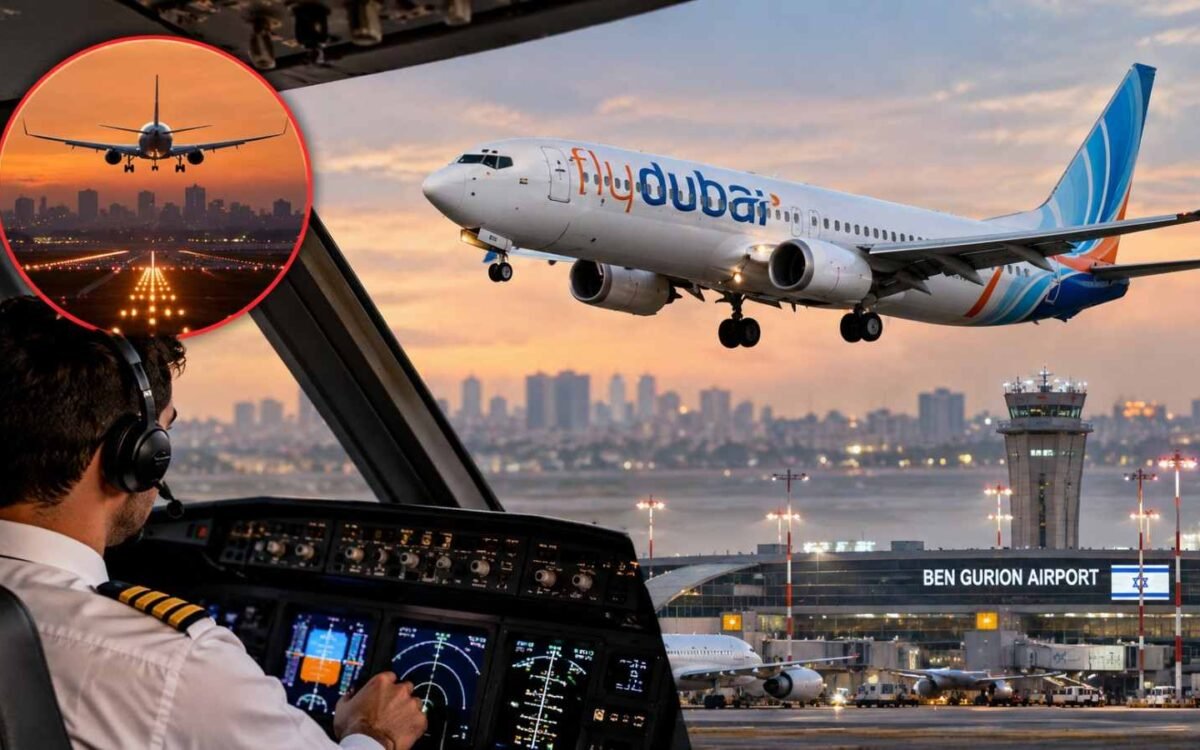
A terrifying incident aboard a Flydubai passenger aircraft appears to have been more than a sudden cockpit confrontation, according to new information emerging from the investigation.
Sources familiar with the probe say the co-pilot suspected of attacking the captain during a flight from Dubai to Tel Aviv intended to crash the aircraft into Ben Gurion International Airport, potentially turning the passenger flight into a catastrophic attack.
The revelation has added a new and deeply troubling dimension to the September 30 incident, which was already being investigated as a serious aviation security breach.
Investigation Points to Possible Airport Target
The Flydubai aircraft was travelling from Dubai toward Tel Aviv when the co-pilot allegedly attacked the captain inside the cockpit.
According to people familiar with the investigation, the suspect subsequently attempted to take control of the aircraft and may have intended to deliberately direct it toward Ben Gurion Airport.
Two Israeli officials familiar with the investigation told Reuters that the co-pilot had allegedly planned the attack before he was employed by Flydubai. Another source briefed on the UAE investigation said the intended target was Ben Gurion Airport near Tel Aviv.
ABC News separately reported that two senior U.S. officials and an Israeli source familiar with the investigation also said the suspected attacker intended to crash the aircraft into Ben Gurion Airport.
The findings remain part of an ongoing investigation and have not been presented as a final judicial determination.
A Flight That Nearly Became a Disaster
The aircraft was carrying passengers from Dubai to Israel when the situation inside the cockpit suddenly escalated.
The captain was allegedly attacked, and the aircraft subsequently experienced a dramatic loss of altitude. Reuters reported that the plane plunged almost 14,000 feet in less than 30 seconds during the struggle.
The captain managed to open the cockpit door, allowing passengers and other crew members to intervene.
Several passengers rushed forward and helped overpower the suspected attacker. Two off-duty pilots who were travelling on the aircraft also assisted in regaining control of the plane.
The aircraft was eventually diverted to Tabuk, Saudi Arabia, where it made an emergency landing.
The actions of the captain, passengers and other pilots are now being credited with preventing what could have been a much larger tragedy.
Suspect Had Previously Raised Security Concerns
The investigation has also focused on the suspected co-pilot’s previous aviation history.
The suspect has been identified in multiple reports as Hamam al-Hammami, an Omani national. According to sources cited by ABC News, he had previously been flagged as a security concern and was suspended while training with Oman Air in 2024 over concerns involving extremist material.
That information has raised an important question for investigators: How was someone who had previously attracted security scrutiny subsequently able to obtain employment and operate a commercial passenger aircraft?
The issue could become a central part of the investigation as authorities examine the recruitment, screening and background-check procedures surrounding the pilot.
Did He Consider an Earlier Attack?
New reports suggest the alleged plan may have existed before the September 30 flight.
A source briefed on the UAE investigation told Reuters that the suspect had previously operated a flight to Tel Aviv and allegedly intended to hijack and crash that aircraft as well, but ultimately did not carry out the plan at that time.
If confirmed, such a finding would significantly change investigators’ understanding of the incident.
Rather than being an isolated act that developed suddenly during the flight, it could indicate that the suspect had contemplated an attack over a longer period.
Authorities are expected to examine his previous flights, communications, employment history and possible ideological influences as they attempt to establish a timeline.
Passengers Became the Last Line of Defense
One of the most remarkable aspects of the incident was the role played by passengers.
After the cockpit door was opened, passengers moved toward the disturbance and helped restrain the attacker.
Their intervention gave the flight crew time to regain control and prevented the suspected attacker from maintaining control of the aircraft.
The incident has consequently renewed discussion about the role of passengers and crew during extreme in-flight emergencies.
Modern commercial aircraft are designed with reinforced cockpit doors specifically to prevent unauthorized access. But this incident highlighted a different security challenge: the threat coming from someone who is already authorized to enter the cockpit.
Aviation Security Under Scrutiny
The case has created fresh concerns about insider threats within commercial aviation.
Security measures introduced around the world following previous aviation attacks have traditionally focused heavily on preventing passengers from bringing weapons onto aircraft or gaining unauthorized access to cockpits.
The Flydubai incident raises a different question: what happens when the person with legitimate cockpit access becomes the alleged threat?
The Associated Press reported that the incident has prompted scrutiny of pilot vetting and aviation-security procedures, particularly because the suspected attacker was part of the flight crew.
Israeli officials have also indicated that security checks involving pilots flying into Israel could be tightened.
Flydubai Suspends Israel Flights
The incident has also affected Flydubai’s operations.
The Dubai-based airline suspended its flights to Israel while investigations continued. Reuters reported that the incident came at a sensitive time for regional aviation, which has already been dealing with the effects of wider conflict and security concerns in the Middle East.
The airline has previously described the incident as an altercation in the cockpit and said the underlying circumstances were still being investigated.
The company has also urged caution against premature conclusions while authorities work to establish exactly what happened.
A Wider Investigation Is Underway
The investigation involves authorities from several countries because the flight originated in Dubai, was bound for Israel and ultimately landed in Saudi Arabia.
Officials in the United Arab Emirates are leading the main investigation, with Israeli authorities also examining the incident. Saudi Arabia has been involved because the aircraft diverted to Tabuk after the emergency.
The United States is also monitoring developments, while Oman has become relevant because of the suspect’s nationality and reported previous aviation history.
Investigators now face several major questions:
- Did the suspect deliberately plan to crash the aircraft?
- Was Ben Gurion Airport specifically selected as the target?
- When did the alleged plan begin?
- Were there warning signs that should have prevented him from flying?
- How did he pass subsequent aviation and security checks?
- Was anyone else involved?
- What ultimately triggered the attack during the flight?
A Disaster Narrowly Avoided
The Flydubai incident could ultimately become one of the most significant aviation-security cases of 2026.
What began as a flight from Dubai to Tel Aviv turned into a desperate struggle inside the cockpit, followed by an emergency diversion to Saudi Arabia.
Passengers and crew members intervened before the aircraft could reach its destination, and investigators are now examining whether their actions prevented an intentional attack on one of Israel’s busiest airports.
For now, officials continue to investigate the suspect’s alleged intentions and background. The latest reports provide a disturbing possible explanation for the attack, but several details remain subject to investigation.
What is already clear is that the incident exposed a particularly difficult aviation-security challenge: protecting passengers not only from threats outside the cockpit, but also from potential threats within it.



1 comment