
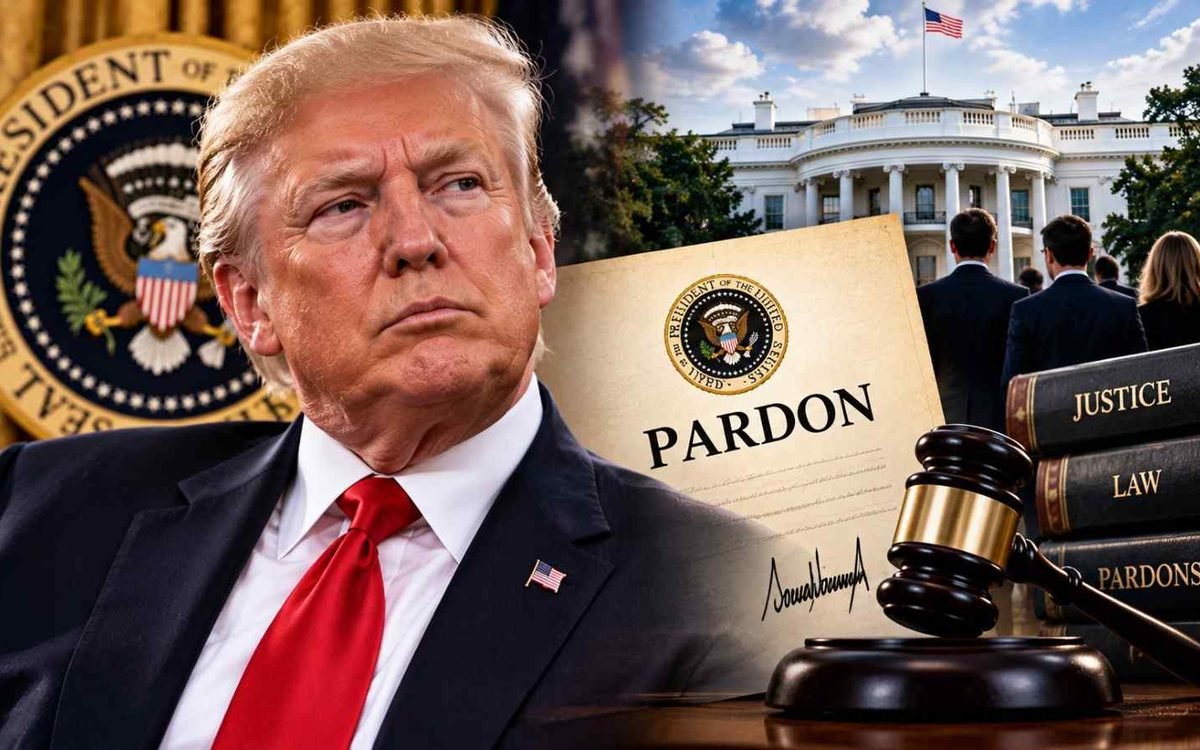
Donald Trump has reopened the debate over presidential pardon powers after saying he could consider pardoning himself and members of his administration before leaving office.
President Donald Trump has reignited a major constitutional debate after suggesting that he could issue a self-pardon and grant clemency to members of his administration before his presidency ends.
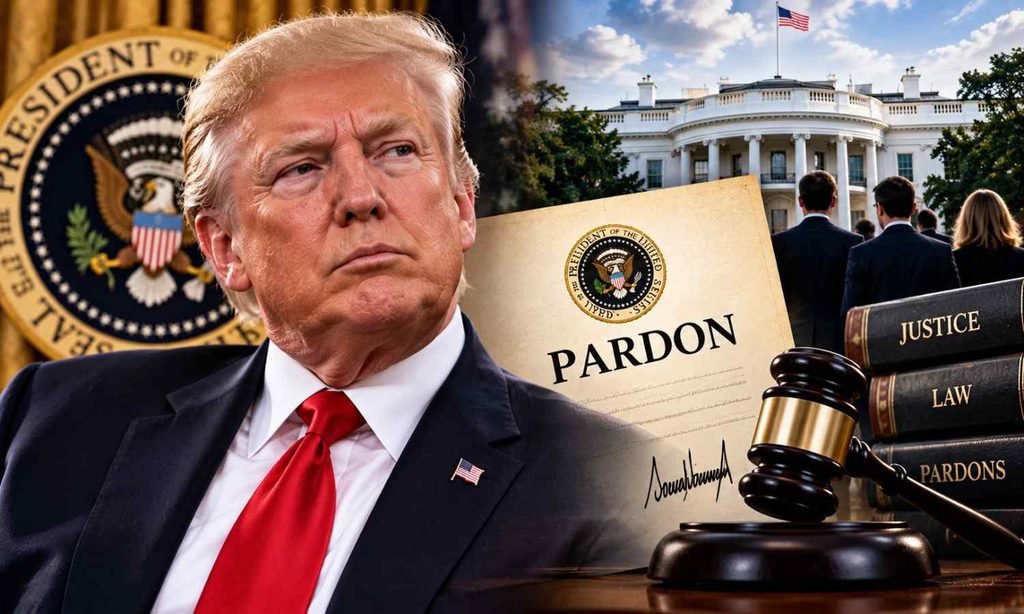
In an interview with Newsmax on October 15, 2026, Trump defended the breadth of presidential pardon powers and said he did not want people working for him to face what he described as years of legal difficulties. His remarks were reported the following day and renewed questions about how far a president can use the power of clemency.
Trump did not announce a specific self-pardon or identify a list of staff members who would receive pardons. Instead, his comments raised the possibility of future action while leaving important legal and political questions unanswered.
The central issue is whether the president’s constitutional authority to pardon people for federal offenses can extend to the president himself—a question that has never been conclusively settled by the US Supreme Court.
Trump Says He Could Pardon Himself
During the Newsmax interview, Trump was asked whether he was seriously considering a self-pardon before leaving office.
He responded that he did not spend much time thinking about the issue because he maintained that he had done nothing wrong. He also reflected on his departure from office in January 2021, saying he had not anticipated the legal battles that followed.
Trump then asserted that he was allowed to issue a self-pardon and described presidential clemency as an exceptionally powerful authority.
His comments did not establish that a self-pardon is legally valid. Instead, they highlighted a long-standing constitutional dispute that legal scholars and government officials have debated for decades.
No US president has ever issued a self-pardon that was then tested in court. As a result, there is no definitive Supreme Court ruling confirming whether a president can legally pardon himself.
Why Trump Is Talking About Pardons for His Staff
Trump also suggested that he would be willing to pardon members of his administration, saying he did not want them to endure prolonged legal battles and the expense of hiring lawyers.
His comments follow earlier remarks in which he expressed openness to pardoning administration officials before the end of his term. In an October 2026 interview with TIME, he indicated that he would consider such pardons.
The issue has broader implications because a presidential pardon can provide significant legal protection against prosecution for covered federal offenses. Depending on its terms, a pardon can eliminate or reduce certain criminal consequences, although it does not necessarily resolve every legal or civil issue associated with the underlying conduct.
Trump’s latest remarks did not specify which officials might be considered, what offenses any potential pardons would cover, or whether the White House had begun preparing formal clemency documents.
Without those details, the comments should be understood as an expression of possible future intent rather than confirmation that pardons are imminent.
Can a US President Legally Pardon Himself?
The Constitution grants the president broad authority to issue pardons for offenses against the United States, with an explicit exception for cases of impeachment.
However, the Constitution does not expressly state whether that authority includes the president himself.
The US Justice Department’s Office of Legal Counsel addressed the question in August 1974, shortly before Richard Nixon resigned during the Watergate scandal. Its opinion concluded that a president could not pardon himself, invoking the principle that no one should act as the judge in their own case.
That opinion remains an important part of the legal debate, but the precise constitutional question has never been definitively resolved by the Supreme Court.
Some legal scholars argue that the Constitution’s broad language could support a self-pardon. Others maintain that allowing a president to pardon himself would conflict with fundamental principles of accountability and the rule of law.
If a president attempted a self-pardon, its validity could be challenged, potentially forcing the courts to confront a constitutional question that has remained unresolved for generations.
For now, Trump’s assertion that he is allowed to pardon himself should not be confused with a settled legal right.
Read More- Prince William Could Strip Harry of HRH Title, Report Claims
What the Constitution Says About Presidential Pardons
Article II, Section 2 of the US Constitution gives the president the power to grant reprieves and pardons for federal offenses, except in cases of impeachment.
That authority is substantial, but it has important limits.
Federal offenses: Presidential pardons can apply to crimes under federal law and certain offenses prosecuted under federal authority.
State crimes: A presidential pardon does not erase a state criminal conviction or prevent state authorities from pursuing state-law offenses.
Impeachment: The Constitution specifically excludes cases of impeachment from the president’s pardon power.
Civil liability: A criminal pardon does not automatically eliminate civil lawsuits, private claims or every other consequence connected to the underlying conduct.
These distinctions matter when assessing Trump’s comments. Even if a pardon were issued, its legal effect would depend on the offenses involved and the scope of the document.
The Department of Justice’s Office of the Pardon Attorney explains that the president’s clemency authority applies to federal offenses and does not extend to state convictions.
How Joe Biden’s Pardons Entered the Debate
Trump’s comments also referred to the clemency decisions made by former President Joe Biden.
Before leaving office in January 2025, Biden issued several controversial pardons, including pardons for family members and public figures. His decisions prompted debate over the extent to which presidents should use clemency powers to protect people who might face future investigations or prosecution.
Biden’s actions included a pardon for his son, Hunter Biden, covering federal offenses committed or potentially committed during a specified period. He also issued pre-emptive pardons for several people who had not been charged with crimes, including former officials and members of the House committee that investigated the January 6 attack on the US Capitol.
Biden defended some of those decisions by citing concerns that the individuals could face politically motivated investigations. Critics argued that broad pre-emptive pardons raised questions about accountability and the appropriate use of executive power.
Trump has pointed to Biden’s decisions while defending his own potential use of clemency. However, the legality and implications of any future Trump pardon would need to be evaluated according to its own terms and the relevant constitutional principles.
What Would a Self-Pardon Mean for Trump’s Legal Position?
A presidential self-pardon would raise several difficult questions about criminal accountability and the limits of executive authority.
First, the legal effect would depend on whether courts accepted the self-pardon as constitutionally valid. Because no president has successfully tested such an action in court, the outcome remains uncertain.
Second, a pardon would apply only within the scope of the president’s federal clemency authority. It would not automatically resolve state criminal matters, civil litigation or every other potential legal exposure.
Third, the question of timing could become significant. A self-pardon issued before leaving office could lead to litigation over whether the president had the constitutional authority to grant it and what offenses it covered.
The issue is not merely political. It touches on the balance between executive power and the principle that public officials remain subject to the law.
A court challenge could ultimately force the judiciary to clarify a question that has remained unsettled since the final days of the Nixon administration.
Could Trump Pardon Administration Officials Before Leaving Office?
Trump’s comments suggest he remains open to using presidential clemency for members of his administration, but no comprehensive list of intended recipients has been announced in the remarks cited in recent reporting.
Presidents have historically used pardons and commutations in a range of circumstances, including cases involving rehabilitation, disputed prosecutions, public service and political controversy.
A pardon can be granted after a conviction or, in some circumstances, before criminal charges have been filed. The precise legal consequences depend on the wording and scope of the clemency grant.
However, issuing pardons to officials based on anticipated investigations could trigger public debate about whether clemency is being used to protect public servants from unfair prosecution or to shield allies from accountability.
The president’s stated concern about lengthy legal battles is one part of that debate. The broader question is how to balance the constitutional power of clemency with public confidence in equal application of the law.
Why Trump’s Remarks Matter
Trump’s statements have significance beyond the possibility of individual pardons.
They highlight continuing disagreements over the scope of presidential authority, the use of executive clemency and the safeguards intended to prevent abuses of power.
Supporters of broad presidential pardon authority often emphasize that the Constitution deliberately gives the president substantial discretion. They argue that clemency can correct injustices and protect individuals from excessive or politically motivated prosecution.
Critics counter that using pardons to protect a president or close associates could weaken accountability, particularly when the people receiving clemency are connected to the administration granting it.
The unresolved question of self-pardons makes the debate especially consequential. If a president attempted one, the legal challenge could have implications well beyond a single administration.
What Happens Next?
For now, Trump has raised the possibility of pardoning himself and members of his administration without announcing a specific plan or formal decision.
Any eventual pardon would need to be assessed according to its wording, the offenses involved and the constitutional limits on presidential authority.
A self-pardon would face an additional obstacle: the longstanding Justice Department opinion that a president cannot pardon himself, alongside the absence of a definitive Supreme Court ruling on the question.
Further developments could include additional statements from the White House, the release of formal clemency documents or legal analysis of any proposed action.
Until a specific pardon is issued, it remains premature to conclude that Trump will pardon himself or particular staff members.
Conclusion
Donald Trump’s latest comments have brought presidential pardon powers back into the national spotlight. By saying he could consider a self-pardon and expressing concern about legal battles facing his staff, Trump has raised questions about how he might use one of the presidency’s most consequential constitutional powers.
The president has broad authority to pardon federal offenses, but the legality of a self-pardon remains unresolved. The Justice Department’s 1974 opinion argues that presidents cannot pardon themselves, while the Supreme Court has never issued a definitive ruling on the matter.
Trump has not announced that he will issue a self-pardon or identified officials who will receive clemency. For now, the debate centers on what the president says he could do, what the Constitution permits and how the courts might respond if the issue is formally tested.


1 comment