
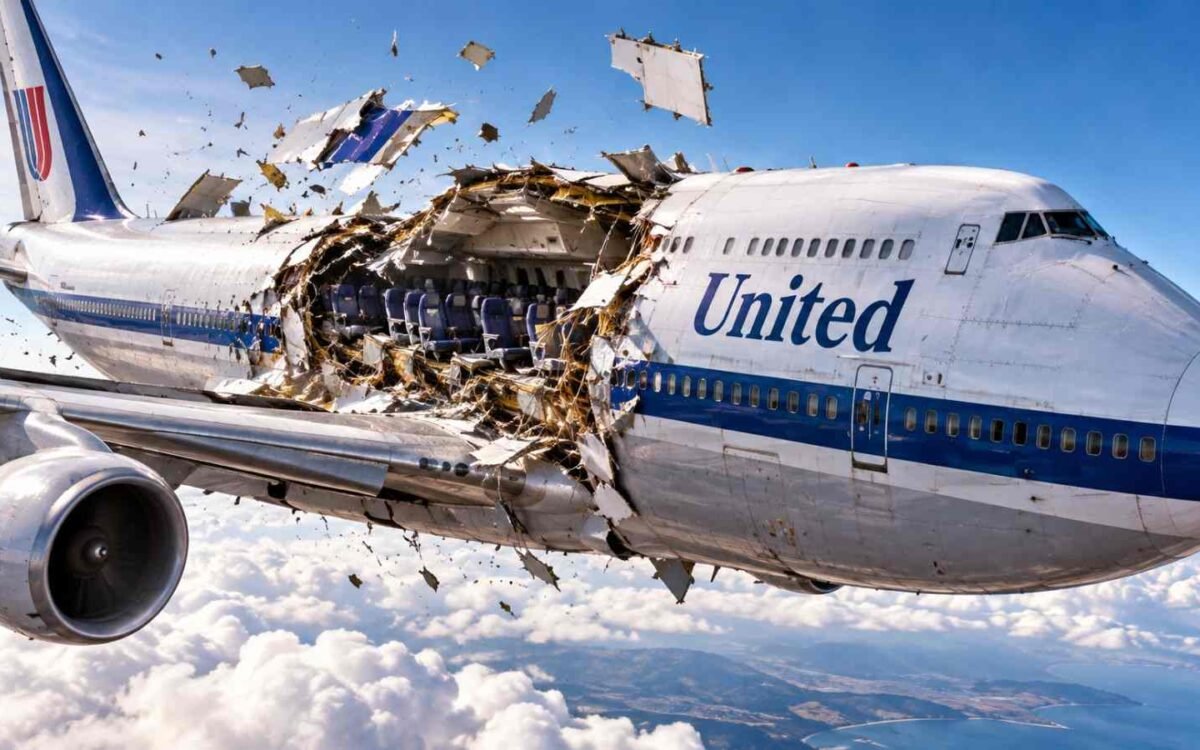
A routine overnight flight across the Pacific Ocean turned into a fight for survival when a Boeing 747 suddenly suffered a catastrophic structural failure high above the ocean. At approximately 23,000 feet, a cargo door separated from the aircraft, ripping away a large section of the fuselage and exposing part of the passenger cabin to the open sky.
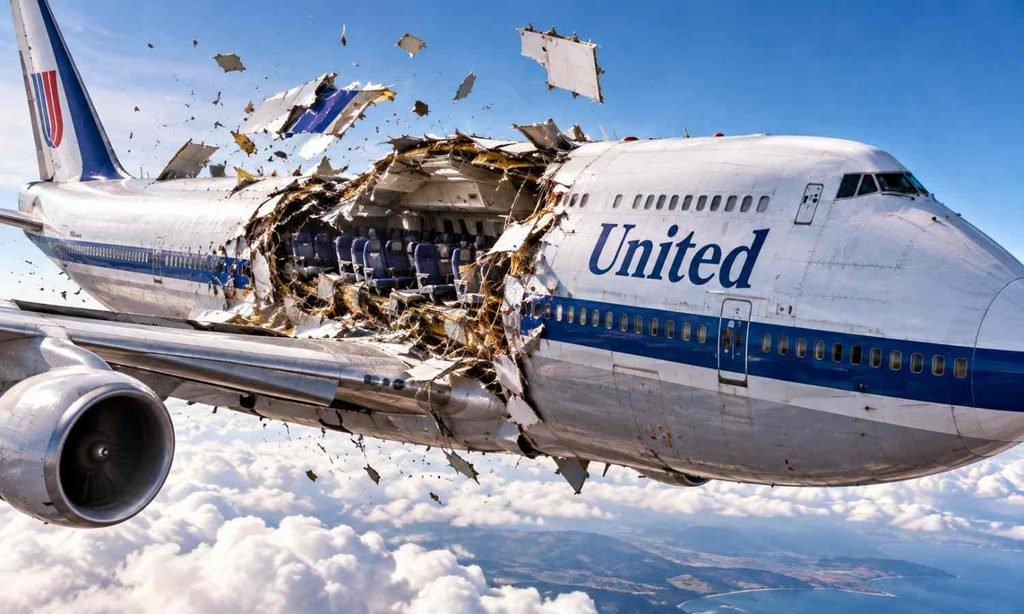
The aircraft was United Airlines Flight 811, travelling from Honolulu, Hawaii, towards Auckland, New Zealand, and Sydney, Australia, on February 24, 1989. Within seconds, the cabin was transformed by explosive decompression, flying debris and severe damage to the aircraft.
Nine passengers were lost after being ejected from the aircraft. Others faced a terrifying emergency as the crew fought to regain control of the damaged jumbo jet.
Yet the Boeing 747 did not fall from the sky. The flight crew managed to turn back towards Honolulu, shut down two damaged engines and land the aircraft safely.
The accident would become one of the most significant aviation safety cases involving a Boeing 747 cargo door, exposing serious weaknesses in the aircraft’s locking system.
A Routine Flight Turns Into an Aviation Nightmare
United Airlines Flight 811 departed Honolulu International Airport during the early hours of February 24, 1989. The Boeing 747-122 was carrying 337 passengers and 18 crew members as it began its journey across the Pacific.
The aircraft was climbing through the sky when the disaster struck.
According to the US National Transportation Safety Board (NTSB), the aircraft was between approximately 22,000 and 23,000 feet when it experienced explosive decompression.
Passengers suddenly heard a loud noise as the forward lower cargo door separated from the aircraft. The failure tore away a substantial section of the surrounding fuselage and damaged the cabin floor above the cargo compartment.
The sudden loss of cabin pressure created an extremely dangerous situation. A large opening appeared along the forward right side of the aircraft, exposing part of the passenger compartment to the outside air.
The incident unfolded in seconds, leaving the flight crew with an emergency that demanded immediate action.
Nine Passengers Were Lost After the Cabin Was Torn Open
The structural damage had devastating consequences for passengers seated near the affected section of the cabin.
The NTSB confirmed that nine passengers were ejected from the aircraft and lost at sea. The opening also allowed cabin materials and other debris to escape into the night sky.
Passengers elsewhere in the aircraft suddenly found themselves facing a scene few could imagine: a large section of the cabin was missing, the aircraft had suffered serious damage, and the crew needed to bring the plane back to safety.
The emergency also caused injuries among people who remained aboard.
Despite the horrifying conditions, the surviving passengers and flight attendants had to remain alert while the pilots assessed the aircraft’s condition and prepared for an emergency return.
The tragedy became a stark reminder of how quickly a mechanical failure can turn a routine commercial flight into a life-threatening emergency.
The Cargo Door Failure Damaged Two Engines
The loss of the cargo door was only part of the problem.
As the door separated, it damaged a substantial section of the fuselage and affected the aircraft’s right-side engines. Both engines on that side were damaged and had to be shut down.
A Boeing 747 is equipped with four engines, but losing two during an emergency creates an enormous challenge for the flight crew—particularly when the aircraft has also suffered major structural damage.
The pilots needed to manage the aircraft’s descent, assess the remaining engines, communicate with air traffic control and identify a suitable airport for an emergency landing.
They chose to return to Honolulu, the airport from which the flight had departed.
The aircraft’s damage also affected the wing and flap systems. The crew could not use the normal flap configuration for landing, forcing them to prepare for a faster-than-usual approach.
Their decisions during those critical minutes would prove essential to bringing the surviving occupants back to the ground.
How the Pilots Managed to Land the Damaged Boeing 747
The flight crew declared an emergency and began manoeuvring the aircraft back towards Honolulu.
Returning to the airport was not straightforward. The pilots had to account for the two damaged engines, the large opening in the fuselage and the limitations affecting the aircraft’s landing configuration.
The damaged flap system meant that the aircraft needed to approach the runway at a higher speed than would normally be expected.
Despite those challenges, the crew successfully brought the Boeing 747 back to Honolulu and landed it.
After the aircraft stopped, an emergency evacuation began. The remaining passengers and crew members were able to leave the aircraft, although several people had sustained injuries.
The landing prevented an even greater loss of life and demonstrated the importance of flight-crew training, emergency procedures and coordinated decision-making under extreme pressure.
However, the successful landing did not lessen the seriousness of the accident. Nine passengers had been lost, and the aircraft’s structural damage raised urgent questions about how the cargo door could have separated in flight.
Investigators Uncovered a Serious Cargo-Door Problem
In the aftermath of the accident, investigators examined the aircraft and its failed cargo-door system.
The NTSB’s investigation focused on the forward lower cargo door and the mechanisms intended to keep it securely closed during flight.
Investigators determined that the door’s locking system had serious weaknesses. Electrical and mechanical problems could allow the locking mechanism to move towards an unsafe position, even after the door had been closed.
The investigation found that a failure involving an electrical isolation switch, combined with an electrical short, most likely caused the door latches to move towards the nearly open position.
The locking components then failed to provide the required protection against the door opening under pressure.
Investigators also examined the wider history of cargo-door safety, including an earlier incident involving a Boeing 747 cargo door. The NTSB identified shortcomings in maintenance and inspection, along with delayed corrective action by United Airlines, Boeing and the Federal Aviation Administration, as contributing factors.
The findings showed that the disaster was not simply an unpredictable event. It involved weaknesses in the design, operation and oversight of a critical aircraft safety system.
Read More- World of Warcraft: Forever Promises to Preserve Classic Class Gameplay Instead of Overhauling It
A Major Aviation Safety Investigation Followed
United Airlines Flight 811 became an important case study in aircraft engineering and aviation safety.
The accident highlighted the importance of ensuring that cargo doors remain securely locked throughout every phase of flight. Unlike a small mechanical malfunction, a failure of this kind could damage the surrounding fuselage and expose the passenger cabin to a catastrophic loss of pressure.
Investigators also faced the challenge of examining the door mechanism itself. Initially, the cargo door had fallen into the Pacific Ocean, and the NTSB proceeded with its investigation without being able to inspect the recovered door.
The door was later located and recovered from the ocean floor, providing investigators with additional evidence.
That evidence helped clarify how the locking mechanism had failed and strengthened the understanding of the accident’s causes.
The case reinforced a central lesson of aviation safety: even a component that appears to perform a simple function can have consequences for the entire aircraft if its design or maintenance is inadequate.
What Happened to the Boeing 747 After the Accident?
Despite the extensive damage, the aircraft was repaired and returned to service after the accident. It was later re-registered as N4724U.
That outcome was unusual given the severity of the structural damage, but the aircraft’s return to service followed extensive repair work.
The accident itself, however, remained a defining event in discussions about Boeing 747 cargo-door safety.
The NTSB’s findings helped direct attention towards the design of the locking system and the need for effective inspections, maintenance procedures and timely corrective action.
For aviation professionals, Flight 811 remains a reminder that safety depends on several layers working together: engineering design, maintenance, regulatory oversight and the ability of crews to respond to emergencies.
The Lasting Lessons of United Airlines Flight 811
The story of Flight 811 is both a tragedy and an example of how aviation investigations can uncover hidden dangers.
Nine passengers lost their lives when the cargo door separated and tore open the aircraft’s fuselage. The remaining occupants faced an emergency involving explosive decompression, structural damage and the loss of two engines.
The pilots nevertheless managed to return the aircraft to Honolulu, preventing the incident from becoming an even greater catastrophe.
The investigation that followed identified serious weaknesses in the cargo-door locking system and shortcomings in the response to earlier safety concerns.
More than three decades later, the accident continues to illustrate why aircraft components must be designed, maintained and inspected to the highest standards.
A Boeing 747 travelling across the Pacific had suffered damage that exposed passengers to the open sky. The fact that the aircraft was brought safely back to land was remarkable—but the lives lost and the findings of the investigation remain the most important parts of its story.



1 comment